
SO2 pressure-swing adsorption
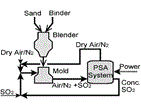
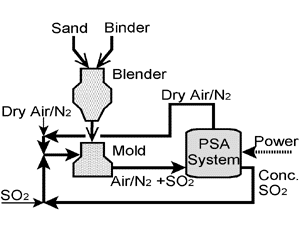
The new process being developed by ARI, based on pressure-swing adsorption, requires no regenerant; hence, it produces no waste streams. Tests to date have shown recovery rates of 99.5% for SO2 and 99.8% for the carrier gas, allowing for reuse without further purification. Employing this process should reduce energy consumption and eliminate the need for caustic effluent. A schematic diagram of the new mode of operation is shown below.
A Brief Description
The pressure-swing adsorption system, depending on the application, consists of one or two stages comprising a proprietary highly porous adsorbent. The pressure-swing cycle typically comprises pressurization, feed, blowdown, and purge steps. The cycling of two or more beds in parallel ensures continuous processing of the foundry off-gases and complete recovery of the excess SO2.
The principal operating cost of pressure-swing absorption is for power consumed in evacuating the adsorbent vessels during blowdown and maintaining the low pressure during purge.
Challenge
The NICE3 Program of the U.S. Department of Energy, Adsorption Research, Inc. (Dublin, OH), and the Ohio Department of Development (Columbus) are partnering to design and construct a prototype SO2 recovery and reuse system that will be installed and tested toward the fall of 2000.
The challenge is to show that pressure-swing adsorption can replace the current operation of using SO2 once and then discarding it by purging the mold with dry air or nitrogen that must be scrubbed with a caustic solution.
The proposed project will include the design and construction of a pilot-scale prototype using the pressure-swing process. It is to be tested at two or more foundries currently using scrubbers for their waste SO2. This will demonstrate the new technology without disrupting normal operations. In addition, new features to reduce energy losses due to pressure drop will be demonstrated.
Looking down the Road
Projected energy savings are 75% for a medium-sized foundry to recover and reuse SO2 and the carrier gas A rapid, one-to two-year payback is anticipated because scrubber chemicals for waste treatment are eliminated and energy needs are modest.
Further, the process might be applied to other operations that use or produce SO2 such as lead and copper smelting and flue gases from power plants.
Contact: Adsorption Research, Inc, Kent Knaebel, 6175-D Shamrock Ct, Dublin, OH 43016 Tel: 614-798-9090; Fax: 614-798-9091.
The previous case study was adapted from a report by the Office of Industrial Technologies Energy Efficiency and Renewable Energy, U.S. Department of Energy.