
Direct Ammonia (NH3) Slip Monitoring
In order to conform with the Clean Air Act for reducing the NOx emissions from the stacks and other stationary sources one of the methods in practice is to utilize the catalytic / chemical reaction between the NOx and ammonia
In order to conform with the Clean Air Act for reducing the NOx emissions from the stacks and other stationary sources one of the methods in practice is to utilize the catalytic / chemical reaction between the NOx and ammonia. Higher levels of NOx and ammonia may be monitored by the traditional NDIR or the Chemiluminescence (CLD) instrumentation. However, as the allowed NOx emissions are being lowered reliable monitoring of NOx and ammonia poses a technical challenge for either of the two aforementioned technologies.
The traditional NDIR lacks the required sensitivity. The CLD technology for NH3 is a differential technique in which the NOx content is subtracted from the sum of ammonia and NOx. This is frought with problems. (1) The NOx conversion in the non vitreous carbon converters is a variable parameter.
The NOx conversion efficiency in the metallic converters needs frequent verification. (2)The most commonly used metallic converters in the CLD instrumentation give a positive interference in the NOx measurements if ammonia and / or other nitrogenous compounds are present in the sample. The economics, therefore, dictate a precise control of the ammonia injected as well as left unreacted in the process.
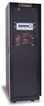
Another critical requirement in the ammonia determination is the transport of the sample to the analyzer without any losses. Generally, some kind of sample conditioning equipment is used. All these processes result in indeterminate losses of the sample. In order to meet these critical requirements California Analytical Instruments, Inc. developed an Instrument Package system. With this system one can measure the ammonia levels both before the catalyst and after the catalyst.
This can cover a wide dynamic range down to 0.1 ppm. At the heart of the system are Innova Model 1312 Photoacoustic Multigas Analyzer and CAI Model 101 Heated Sample Diluter. This combination permits the analysis of samples with high levels of humidity and CO2. Both of these are present in any stack sample.
The traditional NDIR lacks the required sensitivity. The CLD technology for NH3 is a differential technique in which the NOx content is subtracted from the sum of ammonia and NOx. This is frought with problems. (1) The NOx conversion in the non vitreous carbon converters is a variable parameter.
The NOx conversion efficiency in the metallic converters needs frequent verification. (2)The most commonly used metallic converters in the CLD instrumentation give a positive interference in the NOx measurements if ammonia and / or other nitrogenous compounds are present in the sample. The economics, therefore, dictate a precise control of the ammonia injected as well as left unreacted in the process.
Another critical requirement in the ammonia determination is the transport of the sample to the analyzer without any losses. Generally, some kind of sample conditioning equipment is used. All these processes result in indeterminate losses of the sample. In order to meet these critical requirements California Analytical Instruments, Inc. developed an Instrument Package system. With this system one can measure the ammonia levels both before the catalyst and after the catalyst.
This can cover a wide dynamic range down to 0.1 ppm. At the heart of the system are Innova Model 1312 Photoacoustic Multigas Analyzer and CAI Model 101 Heated Sample Diluter. This combination permits the analysis of samples with high levels of humidity and CO2. Both of these are present in any stack sample.
System Validation:
The system was validated in the laboratory with synthetic gas blends and also in a pilot plant of a catalyst manufacturer. At CRI Catalyst, The WOODLAND Hills of Texas, test samples were generated and reacted with ammonia in a small DENOX pilot plant. The test samples were collected both before and after the reactor. Prior to the analysis by the 1312, the samples were 100-fold diluted.
N/A, 1238 West Grove Avenue, Orange, CA 92865-4134. Tel: 714-974-5560; Fax: 714-921-2531.